An eyebrow transplant moves hair follicles to eyebrows that are thin, have lost their shape or are missing. The follicles are usually taken from the back of the head, selecting single-hair grafts, and implanted one by one following the natural direction of the brow.
How is an eyebrow transplant performed?
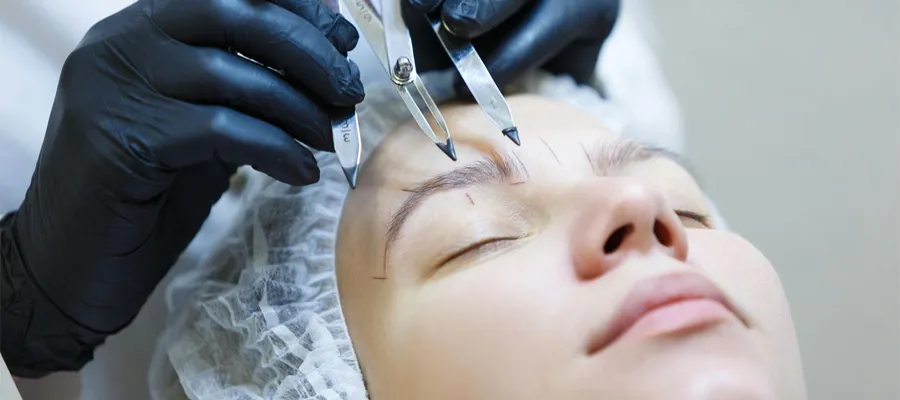
- Shape design. The start, highest point and tail of the brow are drawn to suit your face.
- Local anaesthesia. The procedure is performed under local anaesthesia.
- Extraction. Mainly single-hair follicles are extracted with FUE.
- Implantation. Eyebrow hairs grow at a very flat angle and in a specific direction, so each graft is placed with this direction in mind.
Who is it suitable for?
- people with naturally sparse eyebrows;
- people whose brows no longer grow back after years of over-plucking;
- people with gaps caused by scars, burns or injury;
- people who want brows made of their own hair instead of permanent make-up.
If eyebrow loss is related to a thyroid condition or a skin disease, these causes should be investigated first.
Recovery and results
Small scabs and mild redness may appear in the brow area in the first days; the scabs usually fall off within about a week. Some of the transplanted hairs may fall out in the following weeks. New hairs start to grow after about 3–4 months, and the final result develops over 6–12 months.
Because the transplanted hairs come from the scalp, they keep growing like scalp hair and need to be trimmed regularly.
Frequently Asked Questions
How many grafts are needed for an eyebrow transplant?
This depends on how sparse the brows are and the shape you want. Fewer grafts are needed to fill gaps, more for a complete reconstruction. The exact number is given after the examination.
Does an eyebrow transplant look natural?
When the direction, angle and density of the hairs are planned correctly, the result can look natural. Trimming the transplanted hairs regularly also matters for a natural look.
Are scars visible after an eyebrow transplant?
Very small openings are used in the brow area and are usually not visible after healing. We explain this in detail in our article Are scars visible after eyebrow transplant?
Who should not have an eyebrow transplant?
If eyebrow loss is caused by an active skin disease or an untreated hormonal problem, or if there are not enough follicles in the donor area, the procedure may be postponed or not recommended.
To have your hair assessed, send the free online hair analysis form or message us on WhatsApp.
This article is for general information and does not replace a medical consultation. The right treatment for you can only be decided by a doctor after an examination.