
Recovery after a hair transplant happens in two very different phases. The visible healing of the skin takes about two weeks. The growth of the new hair takes about a year. Between the two comes a phase that worries many patients: the transplanted hairs fall out a few weeks after the procedure, and nothing seems to happen for a while.
This guide follows the whole process, from the day of the procedure to the final result, and explains what is normal at each step, what helps and which signs mean you should contact your clinic.
At a glance
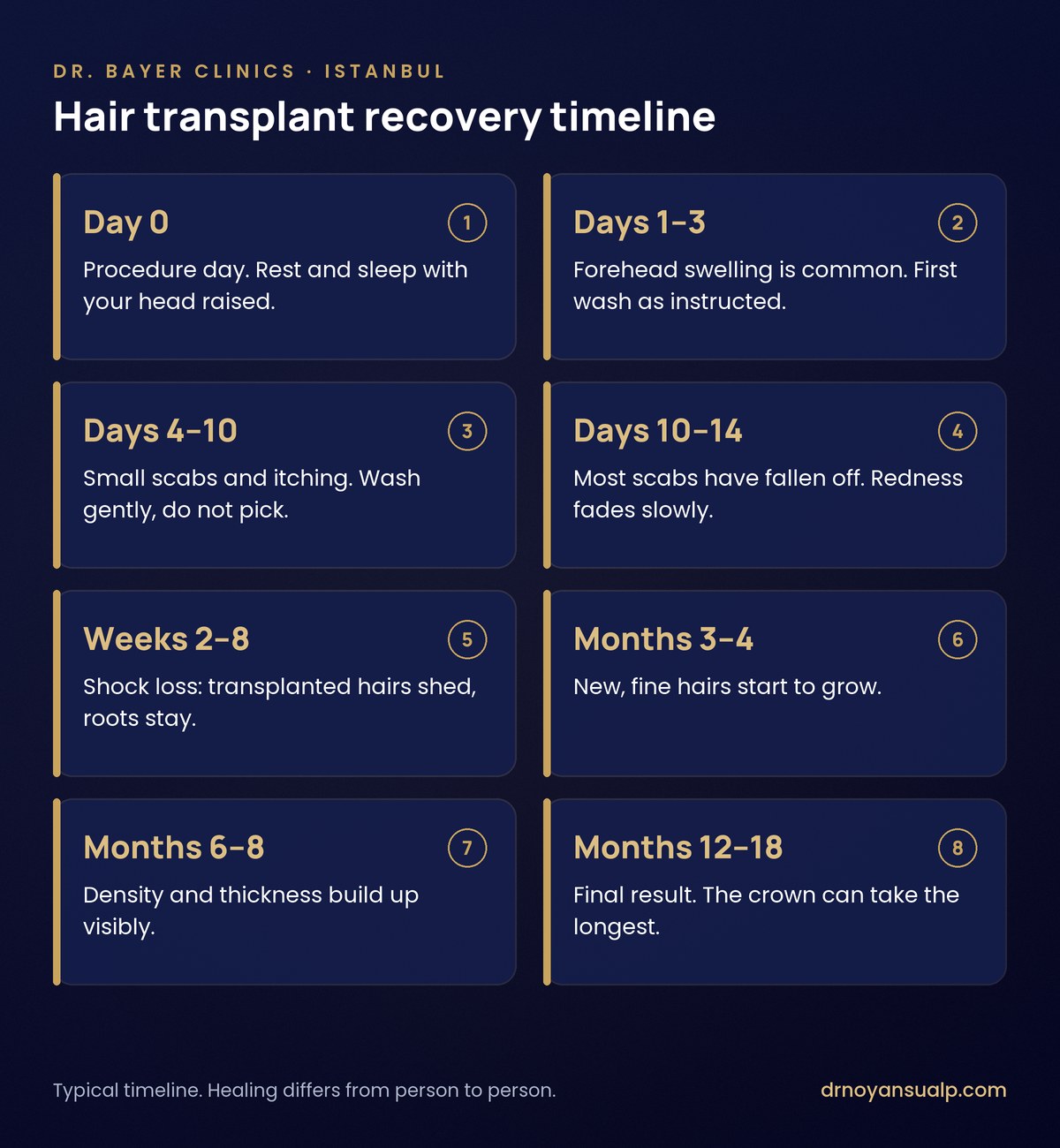
- Days 1–3: swelling of the forehead is common; the first wash is done as your clinic instructs.
- Days 4–14: small scabs form and then fall off; most people look presentable again by the end of the second week.
- Weeks 2–8: the transplanted hairs shed (“shock loss”); the roots stay in place.
- Months 3–4: new, fine hairs start to grow.
- Months 12–18: the final result; the crown often takes the longest.
The day of the procedure (day 0)
A hair transplant is done under local anaesthesia, so you are awake but the treated areas are numb. A typical session takes most of the day. Before you leave, the clinic explains how to sleep, wash and take any prescribed medicines, and usually gives you a written aftercare sheet.
On the first night the treated areas may feel tight or sore once the anaesthetic wears off. This is usually controlled with the pain relief your doctor recommends. Sleep with your head raised, avoid touching the grafts and keep the recipient area away from the pillow.
Days 1–3: swelling and the first wash
Swelling of the forehead is common in the first days and often peaks around day two or three. It can move down towards the eyes before it goes away, usually within a week. Sleeping with your head raised helps. A cold pack on the forehead, never on the grafts, can make you more comfortable.
The grafts are most fragile during these first days. Do not rub, scratch or press the treated area, avoid bending over for long periods and do not do anything that makes you sweat. The first wash is usually done at the clinic or at home on a day set by your doctor, using a special lotion and gentle, low-pressure water.
Days 4–10: scabs and itching
A tiny crust forms around each graft. Gentle daily washing, as your clinic shows you, softens these crusts so that they come off on their own. Picking at them can pull grafts out, so leave them alone even when they itch.
Itching is a normal part of healing. A moisturising lotion recommended by your doctor usually helps. The donor area at the back of the head heals quickly and short hair soon covers it.
Days 10–14: the scabs fall off
By the end of the second week most of the crusts have gone and normal washing can usually resume. The skin may still look pink or red for a few weeks, especially in people with fair skin. Mild numbness in the donor or recipient area is also common and usually improves over the following weeks or months.
Many people return to office work within a few days of the procedure if they are comfortable with how they look, and to physically demanding work after about two weeks. Your doctor will give you advice that fits your job. If you are flying home after the procedure, agree the date with your clinic; travel is usually planned after the first wash and check-up.
Weeks 2–8: shock loss
Between the second and eighth week most of the transplanted hairs fall out. This is expected. The hair shafts are shed, but the follicles stay under the skin and enter a resting phase before they start a new growth cycle.
Some people also notice temporary shedding of their own hair around the transplanted area or in the donor area. This is a form of telogen effluvium caused by the stress of surgery. In most cases it grows back over the following months. If shedding is heavy, patchy or still increasing after the third month, show it to your doctor.
One month after a hair transplant
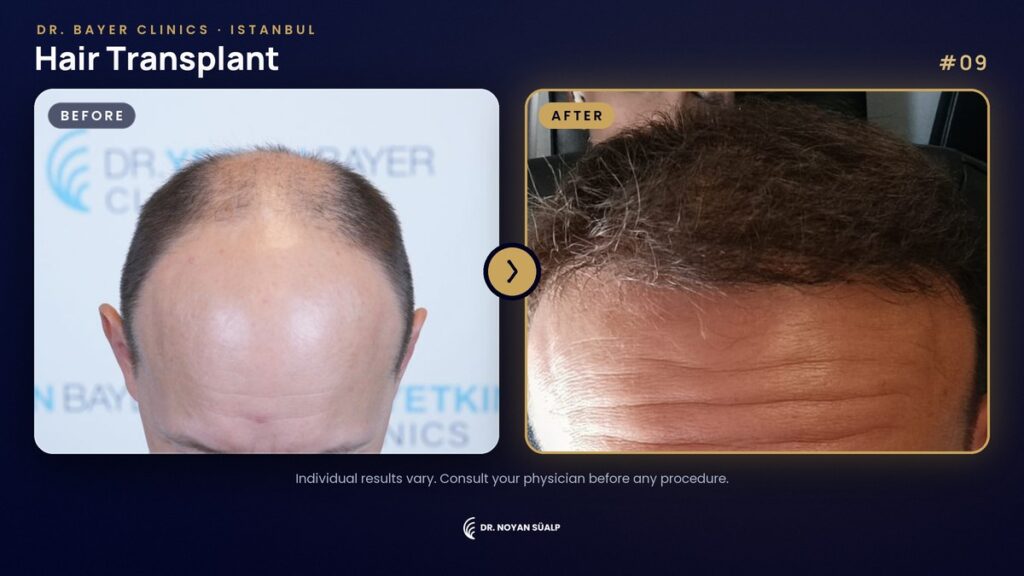
At one month the head often looks much as it did before the procedure, because most of the transplanted hairs have shed. Redness is fading and the donor area is covered by regrowing hair. This “quiet” period can be frustrating, but it is a normal stage of the process and says nothing about the final result.
Months 3–4: new hair starts to grow
The first new hairs usually appear between the third and fourth month. They are thin and soft at first, and some may grow with a slightly different texture or wave before they settle. At this stage some people get small spots that look like pimples where hairs are coming through the skin. They usually settle on their own, but tell your doctor if they become painful, spread or contain pus.
Months 5–8: density builds
Over these months more hairs come through and the existing ones get longer and thicker. Most people see a clear change in the mirror during this period. Growth is not perfectly even: the hairline often fills in earlier than the crown, and areas treated with a no-shave technique can look different from fully shaved areas at the same point in time.
Months 9–18: the final result
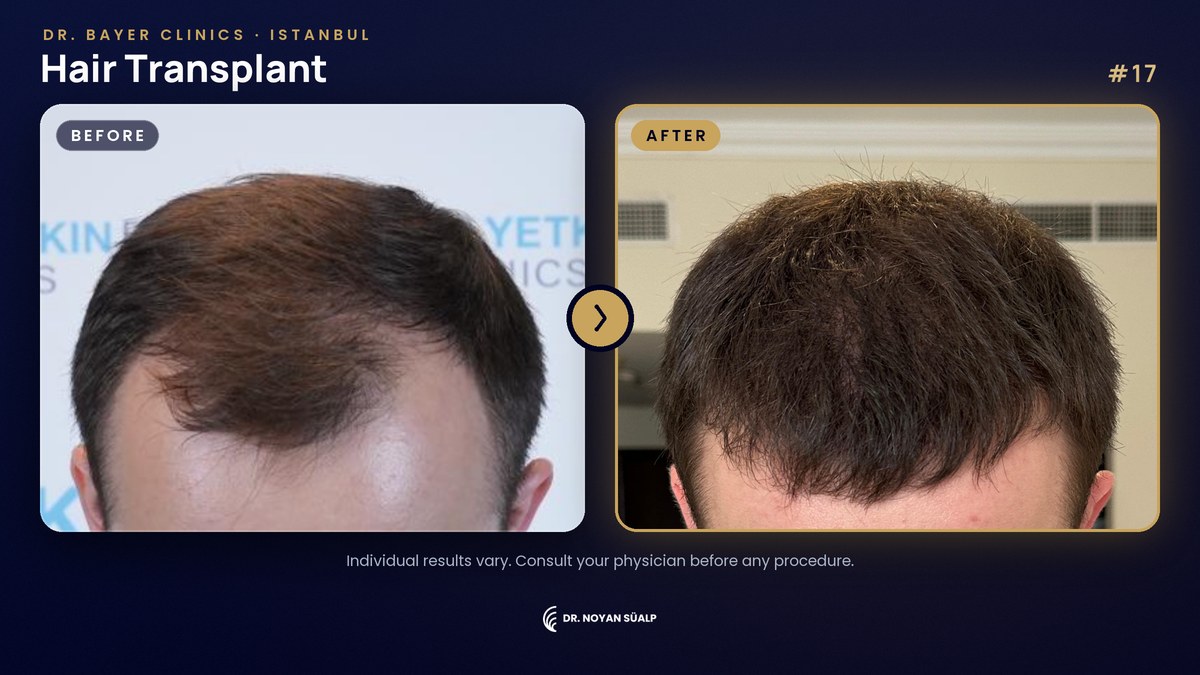
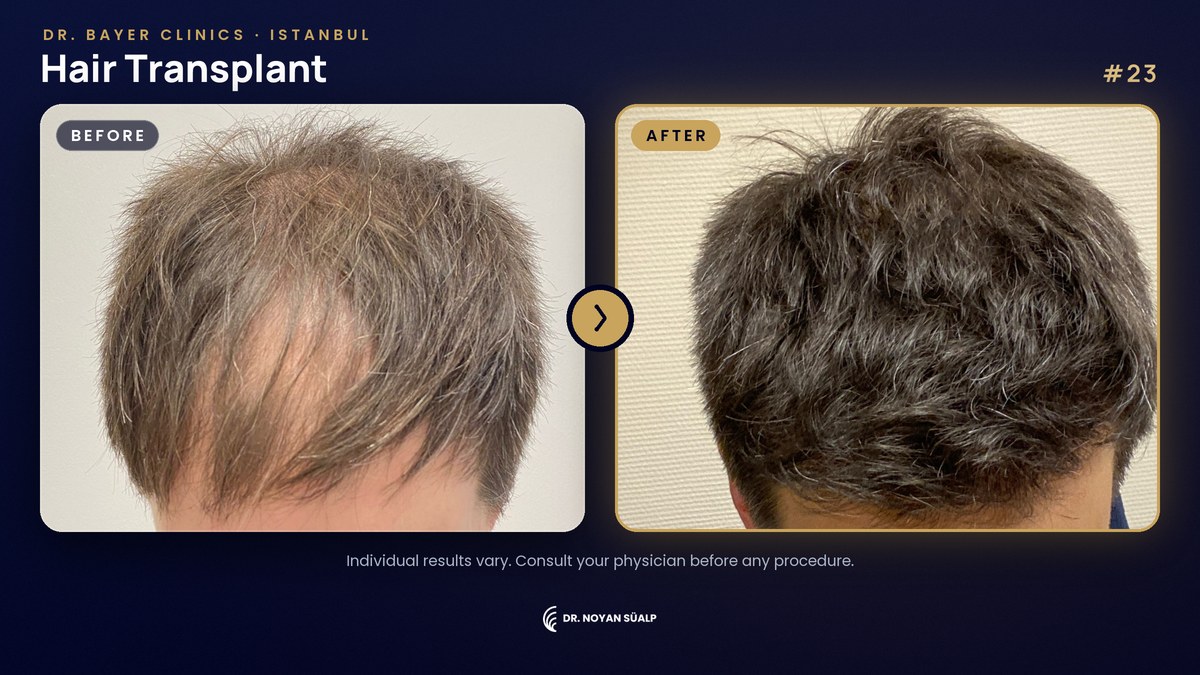
By about twelve months most of the transplanted hairs have grown and thickened. The crown and very dense areas can continue to improve for up to eighteen months. This is why the final result, and any discussion about a second session, should wait until at least a year after the procedure.
Aftercare that supports recovery
Every clinic has its own protocol, and your doctor’s instructions always come first. The points below describe what is commonly advised.
Sleeping after a hair transplant
For the first week, sleep on your back with your head raised, for example on two pillows or with a travel pillow around your neck. This reduces swelling and keeps the grafts away from the pillow. After the first week most people can return to their usual sleeping position.
Washing your hair
Follow the washing method you are shown: apply the lotion gently, wait the recommended time, rinse with lukewarm, low-pressure water and pat dry with a paper towel. Do not rub with a towel or use a hairdryer on a hot setting. Normal washing usually resumes once the scabs have gone.
Exercise and sport
Light walking is fine early on. Avoid heavy exercise and anything that makes you sweat for about two weeks, and avoid contact sports, swimming pools, the sea and saunas for about a month, or for as long as your doctor advises.
Sun, hats and helmets
Protect the treated area from direct sun for the first weeks. A loose, clean hat can usually be worn after the first week, once your doctor agrees. Avoid tight caps and helmets that press on the grafts.
Smoking and alcohol
Smoking reduces blood flow to the skin and can slow healing. Alcohol can increase swelling and bleeding in the first days. It is best to avoid both before and after the procedure, for as long as your doctor recommends.
Haircuts and hair dye
The donor area can usually be trimmed with scissors after about a month. Ask your doctor before using clippers on the transplanted area, and wait several weeks before colouring your hair, because dyes can irritate healing skin.
Warning signs: when to contact your clinic
Serious complications after a hair transplant are uncommon, but you should contact your doctor promptly if you notice:
- pain that gets worse instead of better after the first few days;
- redness, warmth or swelling that spreads, or yellow discharge;
- a fever or feeling unwell;
- bleeding that does not stop after ten minutes of gentle pressure with clean gauze;
- swelling around the eyes that is getting worse after day four.
Is recovery different after FUE, DHI or an unshaven transplant?
The biology of healing and regrowth is the same whichever technique is used: the grafts need the same time to settle, shed and grow. Differences in recovery depend mostly on the number of grafts and the size of the treated area. With an unshaven hair transplant the existing hair hides the treated area better in the first weeks. You can compare the techniques in our guide to FUE vs DHI.
Frequently Asked Questions
How long does it take to recover from a hair transplant?
The skin usually heals in 10 to 14 days, and most people look presentable again by then. The new hair grows over the following months, and the final result is seen at around 12 to 18 months.
When can I go back to work after a hair transplant?
Many people go back to office work after a few days, once the swelling has gone down and they are comfortable with how they look. For physically demanding work, about two weeks is usually advised.
When does shock loss start and stop?
Shock loss usually starts in the second or third week and continues until about the eighth week. New hairs begin to grow from the third or fourth month.
What does a hair transplant look like after 1 month?
Often similar to before the procedure, because most transplanted hairs have shed by then. The redness is fading and the donor area is covered by short hair. This is normal and does not predict the final result.
When can I wash my hair normally after a hair transplant?
Gentle washing with the method your clinic shows you starts within the first days. Normal washing usually resumes after about 10 to 14 days, once the scabs have fallen off.
When can I exercise after a hair transplant?
Light walking is fine early on. Heavy exercise is usually avoided for about two weeks, and swimming and contact sports for about a month. Follow your own doctor’s advice.
Is it normal to get pimples after a hair transplant?
Small spots can appear when new hairs push through the skin, usually between the second and fourth month. They often settle on their own, but painful, spreading or pus-filled spots should be checked by your doctor.
Sources
- Jimenez F, Alam M, Vogel JE, et al. Hair transplantation: basic overview. J Am Acad Dermatol. 2021;85(4):803–814. PubMed
- Goldin J, Zito PM, Raggio BS. Hair transplantation. In: StatPearls. StatPearls Publishing; 2025. PubMed
- Nadimi S. Complications with hair transplantation. Facial Plast Surg Clin North Am. 2020;28(2):225–235. PubMed
- Gómez-Zubiaur A, García-Morrás P, Hermosa-Gelbard Á, et al. Localized telogen effluvium of the donor area after hair transplant surgery in 12 patients. Dermatol Surg. 2021;47(7):1023–1024. PubMed
Further reading: Before and after results
If you are planning a hair transplant in Istanbul, you can send photos through our online hair analysis form or message us on WhatsApp. Read more about the procedure on our hair transplant in Istanbul page.
This article is for general information and does not replace a medical examination or your own clinic’s aftercare instructions. Individual results vary.