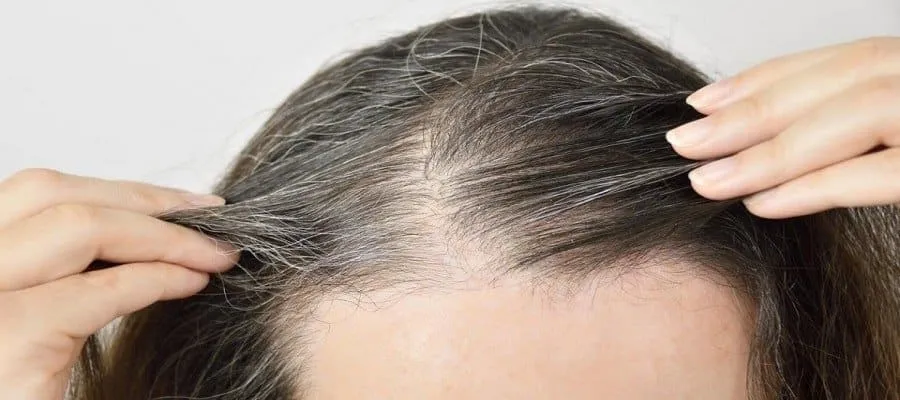
Hair loss in women often follows a different pattern from men: the hair thins evenly over the front and top of the head, while the hairline is usually preserved. This is why the cause of hair loss needs to be investigated carefully before a hair transplant is considered for a woman.
Causes of hair loss in women
- female pattern hair loss (androgenetic alopecia);
- hormonal changes: after childbirth, during menopause, polycystic ovary syndrome;
- iron deficiency, thyroid disease and vitamin deficiencies;
- traction alopecia caused by tightly tied hair over long periods;
- stress, serious illness and rapid weight loss;
- scars or previous surgery.
Many of these causes can be treated, and hair loss may then slow down. Blood tests and a dermatological assessment are therefore the first step.
Which women are suitable for a hair transplant?
A hair transplant may be considered for women who have enough healthy follicles in the donor area and whose hair loss has stabilised. The most suitable cases are:
- a high hairline or the wish to lower the hairline;
- local thinning caused by traction;
- scarred areas;
- thinning limited to a specific area.
If the hair is thinning all over the head, including the donor area, a transplant may not be suitable. In that case options such as medical treatment and hair mesotherapy are discussed.
Which techniques are used?
Because keeping their hair is usually important to women, an unshaven hair transplant is often chosen. The follicles are extracted with FUE, and implantation is often done with DHI so that existing hair is not damaged.
Recovery and results
Redness and small scabs may be present in the first week; longer hair mostly covers them. Shock loss may occur in the following weeks. In women this is sometimes also seen in the hair around the treated area and is usually temporary. New hair starts to grow after 3–4 months and the final result develops by around 12 months.
Frequently Asked Questions
Do women get the same results as men?
Good results can be achieved in women when the right candidates are selected. Because female pattern hair loss tends to be more diffuse, candidates are selected more carefully and results vary from person to person.
Can a hair transplant be done during pregnancy?
A hair transplant is not recommended during pregnancy or breastfeeding. Hair loss after childbirth is also often temporary, so it is advisable to wait before deciding.
Can I colour my hair after the transplant?
You need to wait several weeks before colouring or other chemical treatments. Your doctor will tell you the exact timing based on your recovery.
What happens if my hair loss continues after the transplant?
Transplanted follicles are usually more resistant to hair loss, but your own hair may continue to thin. A treatment plan to protect your hair may therefore be recommended after the transplant as well.
Further reading: Hair transplant recovery timeline · Is a hair transplant permanent?
To have your hair assessed, send the free online hair analysis form or message us on WhatsApp.
This article is for general information and does not replace a medical consultation. The right treatment for you can only be decided by a doctor after an examination.