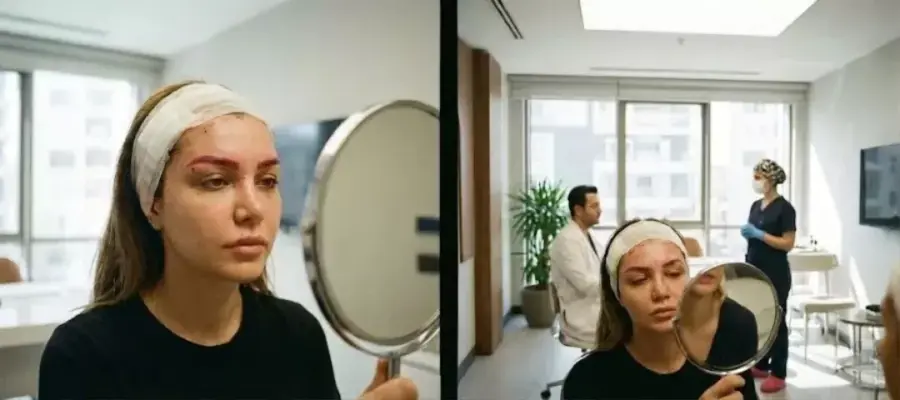
No, scars after eyebrow transplantation are generally temporary and become invisible as the skin heals. In the first few days, symptoms such as redness, scabbing, and mild swelling are normal. These marks are part of the natural healing process and largely disappear within 7–10 days. Since the FUE method causes minimal damage to the tissue, the risk of permanent scarring is very low.
Proper care, gentle cleaning, and strictly following the doctor’s instructions help the scars fade completely. After procedures performed by an experienced specialist, the skin regains a smooth and natural appearance.
What Is Eyebrow Transplantation and How Is It Done?
Eyebrow transplantation is a procedure in which healthy hair follicles, usually taken from the back of the head, are transferred to the eyebrow area using special techniques. This process is performed with the FUE (Follicular Unit Extraction) method. The procedure is done under local anesthesia and takes approximately 2–3 hours. Its biggest advantage is providing results that are closest to the natural eyebrow structure.
The transplanted hairs are placed according to the natural growth direction and angle of the eyebrows. This prevents any artificial appearance after the procedure. However, as with any surgical procedure, there is a minimal risk of scarring after eyebrow transplantation. Whether these scars become permanent depends on many factors.
Does Eyebrow Transplantation Leave Scars?
In general, eyebrow transplantation scar formation is very unlikely. Thanks to the FUE method, no large incisions are made on the skin, which greatly reduces the risk of scarring. However, factors such as skin type, post-procedure care, and the experience of the doctor play a key role in scarring risk.
In some sensitive skin types, micro-level marks may remain for a while. Especially in the donor area where the follicles are taken, mild scabbing can be seen. However, these scabs fall off within a few weeks and the skin renews itself over time. In the eyebrow area, when the procedure is performed with correct angles, visible scarring is almost impossible.
What Factors Affect Scar Formation After Eyebrow Transplantation?
- Quality of the applied method: In stitch-free and micromotor-supported techniques like FUE, the risk of scarring is lower.
- Doctor’s experience: Incorrect angle and density during transplantation may cause scarring.
- Skin type: Some skin types are more sensitive to wound healing and may develop hyperpigmentation.
- Care process: Not following post-procedure care can increase infection risk and lead to scars.
- Age and lifestyle: Smoking and poor nutrition slow healing and increase scarring risk.
When Do Scabs After Eyebrow Transplantation Fall Off?
Scabs after eyebrow transplantation usually fall off on their own within 7 to 10 days. In the first days, small scabs in the transplanted area are completely normal. These scabs are part of the healing process and protect against infection. It is very important not to pick at them to avoid damaging the follicles.
Gentle washing as recommended by the doctor helps the scabs soften and fall off naturally. Once the scabbing phase is over, the skin becomes smoother and more natural. Being patient and following care instructions are essential for healthy results.
Is It Normal to Have Itching and Redness After Eyebrow Transplantation?
Yes, mild itching and redness after eyebrow transplantation are completely normal. These symptoms are natural reactions showing that the skin is healing. They are especially common in the first few days in the treated area.
These symptoms gradually decrease. However, if severe itching, burning, or discharge occurs, a doctor should be consulted immediately, as these may indicate infection. Avoid scratching the area to prevent scarring.
What Should Be Done to Avoid Scars After Eyebrow Transplantation?
- Do not scratch or touch the area.
- Avoid makeup products for the first week.
- Do not remove scabs manually, let them fall off naturally.
- Use the recommended creams regularly.
- Avoid direct sunlight, use a hat if necessary.
- Stay away from steam, sauna, and hot environments.
- Avoid sleeping positions that apply pressure.
- Reduce or quit smoking and alcohol.
- Do not skip doctor check-ups.
When Does Eyebrow Transplantation Show Full Results?
Eyebrow transplantation usually shows full results between 6 to 12 months, depending on the person. Shock loss in the first 2–4 weeks is normal and temporary. New eyebrows start growing from the third month and become thicker over time. By the 6th month, visible density appears, but a fully natural look may take up to one year.
Results vary depending on skin type, lifestyle, and care routine. Regular care and following medical advice support achieving natural and symmetrical eyebrows. Patience is the most important factor in this process.
Why Is Sun Protection Important After Eyebrow Transplantation?
Sunlight can have harmful effects during skin regeneration. After eyebrow transplantation, the skin is sensitive, and UV rays may cause pigmentation changes and spots. This slows healing and increases the risk of scarring.
Therefore, direct sun exposure should be avoided for at least one month. If going outside is necessary, wearing a wide-brimmed hat or using doctor-recommended sunscreen is the best approach.
Who Is Not Suitable for Eyebrow Transplantation?
Eyebrow transplantation is not suitable for people with active skin diseases, uncontrolled chronic conditions, or pregnant women. Conditions like eczema or psoriasis may make the procedure risky. People with diabetes or heart disease should get medical approval.
Individuals with blood clotting disorders also face higher risk. During pregnancy and breastfeeding, hormonal changes make the procedure unsuitable. A proper evaluation is essential to determine candidacy.
Frequently Asked Questions
Can mistakes after eyebrow transplantation cause permanent scars?
Yes, mistakes after eyebrow transplantation can cause permanent scars and negatively affect results. Picking scabs, scratching, poor hygiene, or early makeup use can damage follicles.
Ignoring care routines delays healing and causes discoloration or scars. Unprotected sun exposure can also cause pigmentation issues. Gentle care and following instructions reduce permanent scarring risk.
How should the face be washed after eyebrow transplantation?
The face should not be washed for the first 3 days; afterward, gentle and controlled cleaning is required.
From the third day, wash using doctor-recommended lotion and shampoo with light tapping motions. Water should be lukewarm and not applied directly. Dry gently with a soft tissue.
Do scars after eyebrow transplantation have psychological effects?
Yes, temporary scars can affect psychological well-being and confidence.
Scabbing and redness may cause stress or social discomfort. However, these are temporary and fade with care. Seeing the process as natural helps reduce anxiety.
Can glasses be worn after eyebrow transplantation?
Glasses should not be worn for the first 7–10 days as they may apply pressure.
Contact lenses are safer. If glasses are necessary, they should be worn briefly without touching the eyebrow area.
Is makeup allowed after eyebrow transplantation?
Makeup should be avoided for the first 10 days. Makeup products may cause irritation or infection.
After 10 days, with doctor approval, light and hypoallergenic products may be used carefully. Keeping the area clean ensures better healing.