

Cover image generated with AI.
There is no medically “best” season for a hair transplant. Winter has some practical advantages, such as less strong sun, less sweating, hats being normal and holidays that give you time to recover, and a few things to plan for, such as colds, dry indoor air and winter travel. The right time is the one that lets you rest and follow your aftercare properly for the first two weeks.
A common question, especially from people who travel to Istanbul for the procedure, is whether to plan it for the winter. Here is how I think about timing, what changes in winter and what does not.
At a glance
- The biology of healing and hair growth is the same in every season.
- In winter it is easier to avoid strong sun and heavy sweating in the first weeks.
- A loose, clean hat can usually be worn after about a week, once your doctor agrees.
- A cold, flu or fever just before the procedure is a reason to postpone it.
- Winter sports, helmets and saunas should wait until your doctor says it is safe.
Does the season affect the result?
The grafts need the same time to settle, shed and grow whatever the weather outside. Visible healing takes about two weeks, transplanted hairs usually shed between the second and eighth week, new hairs appear after three to four months and the final result is judged at around twelve months or later. I am not aware of good evidence that the season itself changes graft survival. What makes a real difference is how carefully the grafts are handled on the day and how well the aftercare is followed in the first weeks.
So the question is not “which season is best for the grafts?” but “when can I give myself the conditions for a calm recovery?” For many people, that happens to be winter.
Winter at a glance: advantages and things to plan for
| Practical advantages in winter | Things to plan for in winter |
|---|---|
| Weaker sun, so it is easier to protect the treated area | Colds and flu are more common; a fever means postponing |
| Less sweating in the first two weeks | Dry indoor heating can make the scalp feel itchy |
| Hats are normal, which helps later in the recovery | Tight beanies, hoods and helmets can press on or rub the grafts |
| Holidays can give you time off work | Icy streets and winter sports increase the risk of knocks and falls |
| A natural pause in outdoor sport and swimming | Winter flights may be delayed; leave some flexibility |
Why winter can be practical
Sun. The treated area should be protected from direct sun in the first weeks. In summer that often means staying in the shade or wearing a hat early; in winter the sun is weaker and this is simply easier.
Sweating and sport. Heavy exercise and anything that makes you sweat a lot is usually avoided for about two weeks, and swimming pools, the sea and saunas for about a month. In winter many people are less active outdoors anyway, so these restrictions feel less disruptive.
Time off. The end-of-year holidays give many people a week or two without work, which matches the period when the scalp is visibly healing. Remember, though, that you will not look “finished” by the time you go back: the redness fades over a few weeks and the shedding phase comes after that.
What needs extra care in winter
Colds, flu and fever
If you develop a fever, a bad cough or feel unwell in the days before the procedure, tell the clinic. In most cases the procedure is postponed until you have recovered. This is a safety decision, not a setback.
Dry indoor air and itching
Itching is a normal part of healing, and dry heated air can make it feel stronger. Do not scratch the grafts. Use only the moisturising lotion your clinic recommends and keep the room ventilated.
Hats, hoods and scarves
In the first days the grafts should not be covered or rubbed. A loose, clean hat can usually be worn after about a week, once your doctor agrees. Avoid tight beanies, caps that press on the hairline and hoods that slide over the head, and pull scarves and jumpers on carefully, or choose clothes that open at the front.
Cold and wind
Cold air does not damage the grafts, but strong wind and freezing temperatures can make the healing skin uncomfortable. Once your doctor allows a hat, wear a loose one outdoors.
Winter sports
Skiing and snowboarding combine helmets, the risk of falls and strong sun at altitude. It is best to wait until the scalp has fully healed and your doctor has approved it, which usually means several weeks rather than days.
Travelling to Istanbul in winter
If you are flying in, arrive the day before the procedure and book your flight home after the first check-up and wash, as your clinic advises. Winter flights are more often delayed, so a little flexibility helps. Istanbul winters are generally mild compared with Northern Europe, but rain and wind are common, so bring a hat you can wear once it is allowed and a jacket that opens at the front. More about planning your stay is on the hair transplant in Istanbul page, and the day itself is described in hair transplant day, hour by hour.
Planning backwards from an important date
If you have a wedding, an event or a summer holiday in mind, plan backwards from that date:
- 2 weeks: most scabs have gone and many people look presentable, though the skin may still be pink.
- 2–8 weeks: the transplanted hairs shed; this is expected and temporary.
- 3–4 months: new hairs start to grow.
- 12 months or later: the final result.
A procedure in winter means that by the following summer many people are in the phase where density is building, but individual timelines vary and the final result takes longer. The full sequence is explained in my hair transplant recovery timeline.
My view as a physician
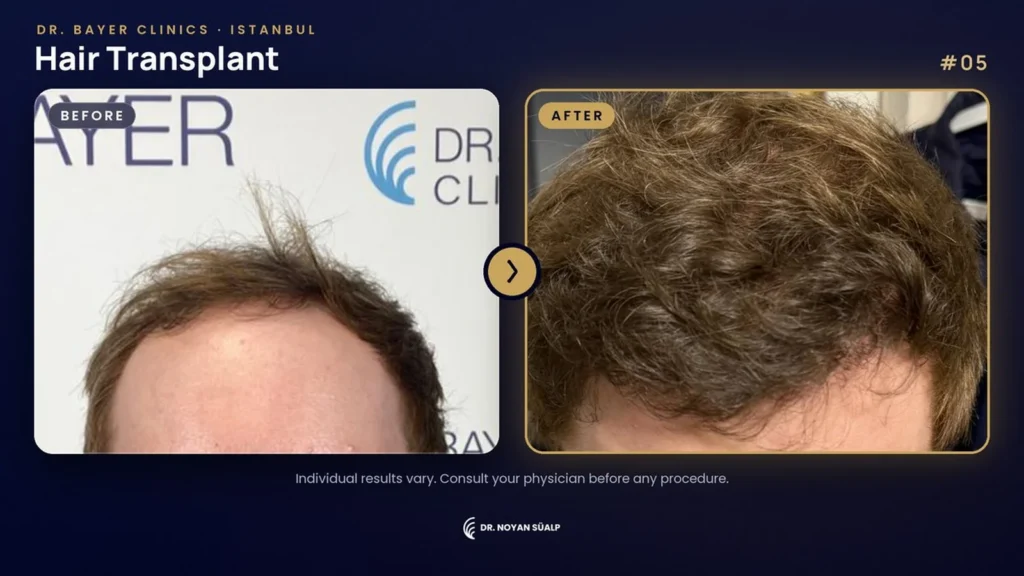
I would not choose a date because of the season alone. I would choose it because you can rest for a few days, avoid heavy exercise for two weeks, protect the grafts, come back for the check-up and give the result a full year. If winter gives you that, it is a good time. If your schedule is calmer in spring, that is a good time too. Before any date is fixed, the more important question is whether a hair transplant is the right option for you at all, which is why the first step is an assessment. You can see the kind of detail I look at in my comments on case 05.
Frequently Asked Questions
Is winter the best time for a hair transplant?
There is no medically best season. Winter can be practical because the sun is weaker, you sweat less and holidays give you time to recover. The right time is when you can follow the aftercare without pressure.
Can I wear a hat in winter after a hair transplant?
A loose, clean hat can usually be worn after about a week, once your doctor agrees. Avoid tight hats and helmets that press on the grafts.
Is cold weather bad for new grafts?
Cold air does not damage the grafts, but wind and freezing temperatures can make healing skin uncomfortable. Protect your head with a loose hat once it is allowed.
Can I go skiing after a hair transplant?
Not straight away. Helmets, falls and strong sun at altitude should be avoided until the scalp has fully healed and your doctor has approved it, usually several weeks after the procedure.
When can I fly home after a hair transplant in winter?
Most people fly home after the first check-up and wash, as the clinic advises. Leave some flexibility in winter, because flights are more often delayed.
Sources
- Jimenez F, Alam M, Vogel JE, et al. Hair transplantation: basic overview. J Am Acad Dermatol. 2021;85(4):803–814. PubMed
- Goldin J, Zito PM, Raggio BS. Hair transplantation. In: StatPearls. StatPearls Publishing; 2025. PubMed
- Nadimi S. Complications with hair transplantation. Facial Plast Surg Clin North Am. 2020;28(2):225–235. PubMed
Further reading: Recovery timeline · Hair transplant day · Is a hair transplant permanent?
If you are thinking about a procedure this winter, send a few photos through our online hair analysis form or message us on WhatsApp, and we can talk about timing.
This article is for general information and does not replace a medical examination or your own clinic’s aftercare instructions. Individual results vary.