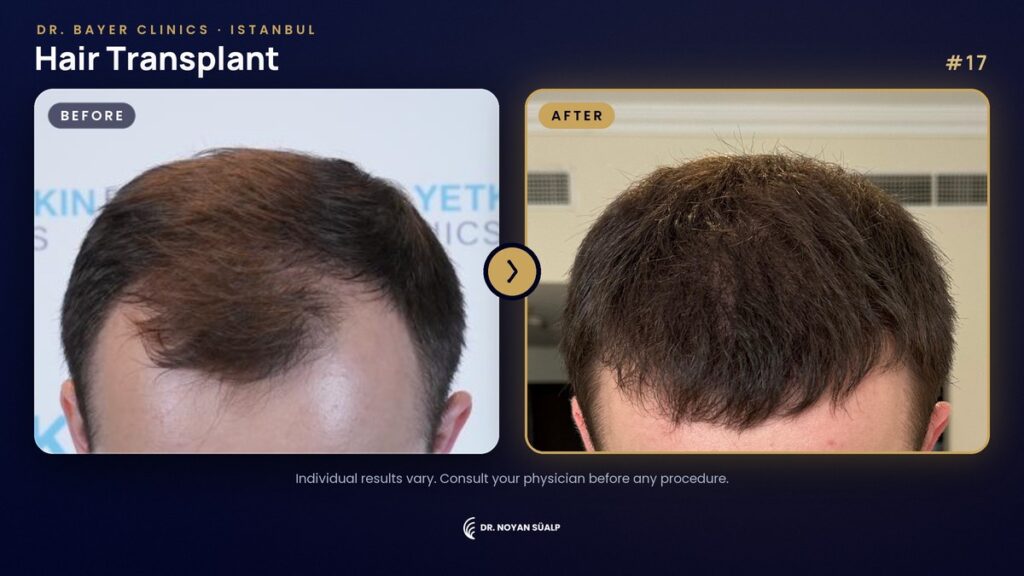

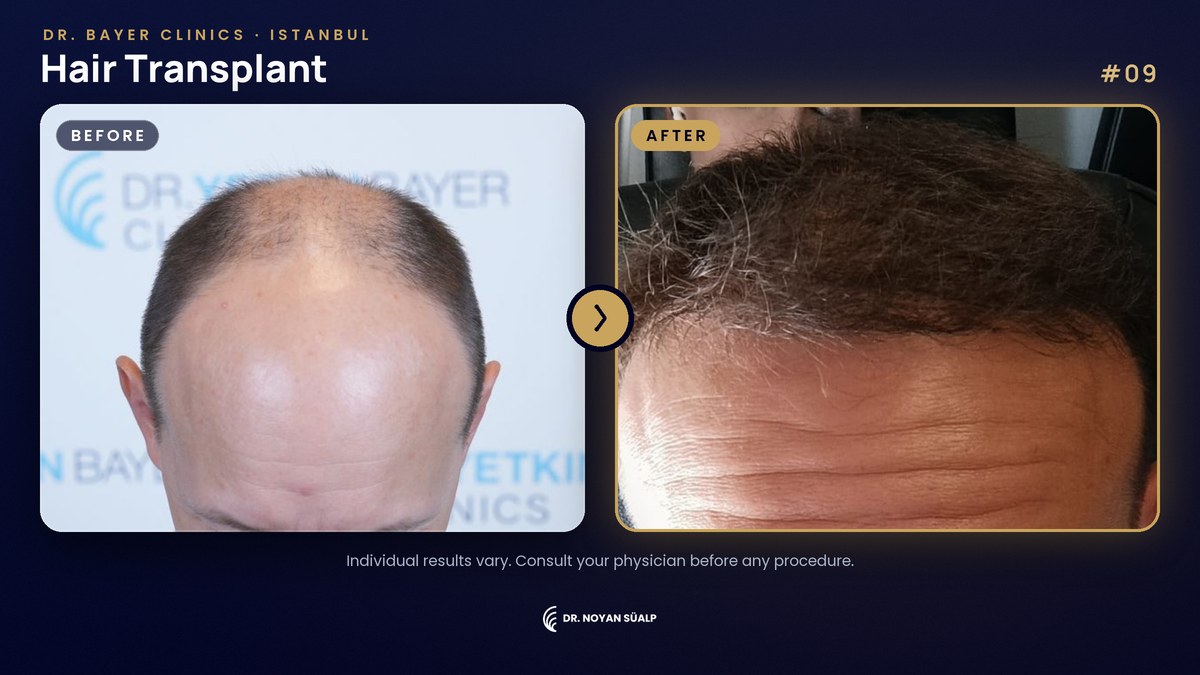
It is one of the first questions people ask before a hair transplant: will the new hair last, or will it fall out again in a few years? The honest answer has two parts. The transplanted hair usually keeps growing for many years, because it comes from an area that is resistant to pattern hair loss. But the hair around it, which was not transplanted, can keep thinning, and that changes how the result looks over time.
This article explains why transplanted hair lasts, what can still change after a transplant and how a good plan protects your result in the long term.
The short answer
- Hair taken from the back and sides of the head usually keeps its resistance to hair loss after it is moved. This is called donor dominance.
- A transplant treats the area that was thinning; it does not stop your native hair from continuing to thin.
- Transplanted hair ages like the rest of your hair: it can turn grey and become a little finer over the years.
- Long-term planning, and in many men medication, help the result keep looking natural as you get older.
Why transplanted hair keeps growing: donor dominance
In male pattern hair loss, follicles on the top of the head are sensitive to dihydrotestosterone (DHT) and gradually shrink. Follicles at the back and sides of the head are much less sensitive, which is why even men with advanced hair loss keep a horseshoe of hair there.
In 1959 the American dermatologist Norman Orentreich showed that when follicles from this resistant area are moved to a bald area, they keep growing as they did in their original place. This principle, known as donor dominance, is the basis of all modern hair transplantation. The grafts used in FUE and DHI are taken from this area for exactly this reason.
What can change after a hair transplant
Your native hair can keep thinning
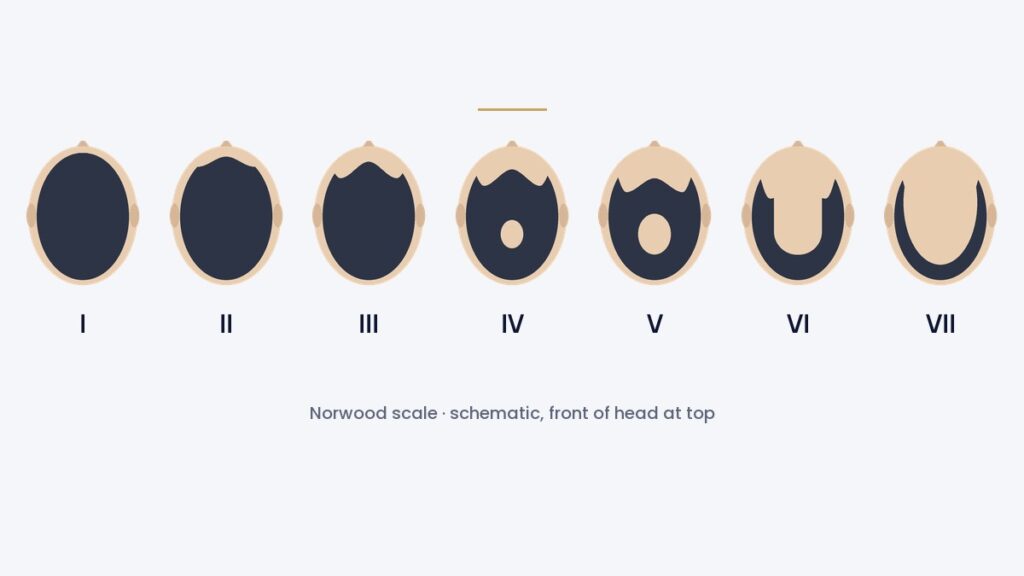
The hair that was not transplanted follows its own course. If your hair loss is still active, the area behind or around the transplanted zone can thin over the coming years. Without planning, this can leave a dense hairline with a thinner area behind it. This is the most common reason why a result looks different ten years later, and it is why doctors plan for future loss, not only for the loss you have today. Our guide to the Norwood scale explains how pattern hair loss usually progresses.
Not every graft survives
Most transplanted grafts take root and grow, but some do not. Graft survival depends on careful extraction, short time outside the body, correct storage and gentle placement. This is why the experience of the team matters, and why the final density is judged only after twelve to eighteen months.
Ageing affects all hair
Transplanted hair behaves like the hair it came from. As you get older it can turn grey, and it may become slightly finer, just as the hair on the back of your head does. In some people the donor area itself thins with age, which is one reason to use it carefully.
The temporary shedding in the first weeks
Between the second and eighth week after the procedure, most transplanted hairs fall out. This is a normal stage called shock loss. The follicles stay under the skin and start to grow new hair from the third or fourth month. See our recovery timeline for the full process.
Other scalp conditions
Donor dominance applies to pattern hair loss. Other conditions, such as alopecia areata or scarring types of hair loss, can affect transplanted hair too. This is why such conditions should be diagnosed and controlled before a transplant is considered.
How to protect your result in the long term
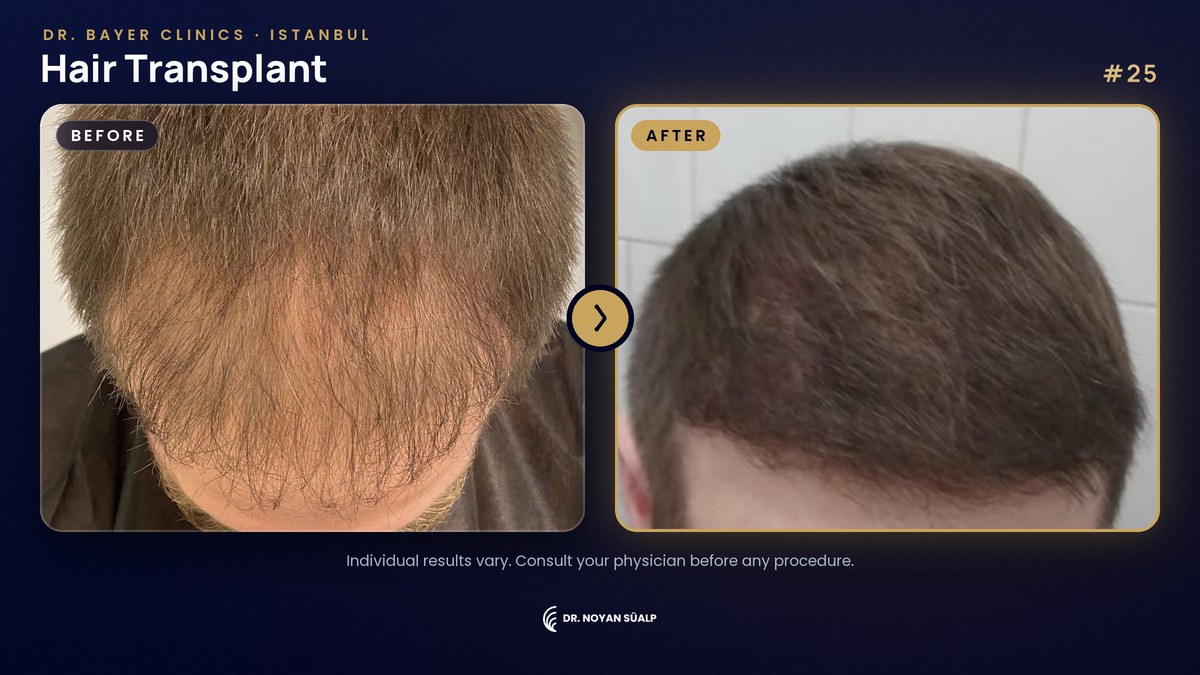
- A plan that respects your age. A hairline that suits you at 25 should still look natural at 50. Very low or very dense hairlines in young men can look unnatural later if the surrounding hair thins.
- Careful use of the donor area. The donor area is limited. Keeping a reserve allows the plan to adapt if more hair is lost later.
- Medication when it is appropriate. Finasteride and topical minoxidil have been shown in clinical trials to slow male pattern hair loss and improve hair counts compared with placebo. They do not affect the transplanted hair, but they can help keep the native hair around it. Whether you need them, and which one, is a decision for your doctor.
- Follow-up. Photos taken under the same conditions every year make it easier to notice changes early.
- A healthy scalp. Treating dandruff, inflammation or other scalp problems supports both native and transplanted hair.
Who is most likely to get a long-lasting result?
The best long-term results are usually seen in people whose hair loss pattern is clear and fairly stable, who have a good donor area and whose expectations match what their donor hair can realistically achieve. Men in their early twenties with fast-progressing loss need especially careful planning, because their final pattern is not yet known.
Will you need a second hair transplant?
Many people need only one procedure. A second session may be discussed if the native hair continues to thin, if more density is wanted in the same area or if the crown was left for later. It is usually considered only after the first result has fully matured, at least twelve months after the procedure.
Frequently Asked Questions
Can transplanted hair fall out?
Yes, temporarily. Most transplanted hairs shed in the first weeks and grow back from the third or fourth month. After that, transplanted hair usually keeps growing for many years, because it comes from an area that resists pattern hair loss.
Will I go bald again after a hair transplant?
The transplanted hair is not expected to be lost to pattern hair loss, but your native hair can keep thinning. A plan that takes future loss into account, and in many men medication, helps the result look natural over time.
How many years does a hair transplant last?
Transplanted hair usually keeps growing for many years. Like the hair on the back of your head, it can gradually become grey or slightly finer with age.
Is FUE or DHI more permanent?
Neither. Both use grafts from the same donor area, so the long-term behaviour of the hair is the same. The technique affects how the grafts are placed, not how long they last.
Does transplanted hair turn grey?
Yes. Transplanted hair keeps the characteristics of the donor hair, so it turns grey at about the same time as the hair on the back and sides of your head.
Do I need to take medication after a hair transplant?
Not always. Medication does not affect the transplanted hair, but it may be recommended to slow the thinning of your native hair. Your doctor will decide based on your age, family history and how active your hair loss is.
Sources
- Orentreich N. Autografts in alopecias and other selected dermatological conditions. Ann N Y Acad Sci. 1959;83:463–479. PubMed
- Jimenez F, Alam M, Vogel JE, et al. Hair transplantation: basic overview. J Am Acad Dermatol. 2021;85(4):803–814. PubMed
- Goldin J, Zito PM, Raggio BS. Hair transplantation. In: StatPearls. StatPearls Publishing; 2025. PubMed
- Kaufman KD, Olsen EA, Whiting D, et al. Finasteride in the treatment of men with androgenetic alopecia. J Am Acad Dermatol. 1998;39(4 Pt 1):578–589. PubMed
- Gupta AK, Venkataraman M, Talukder M, et al. Relative efficacy of minoxidil and the 5-α reductase inhibitors in androgenetic alopecia treatment of male patients: a network meta-analysis. JAMA Dermatol. 2022;158(3):266–274. PubMed
- Nadimi S. Complications with hair transplantation. Facial Plast Surg Clin North Am. 2020;28(2):225–235. PubMed
Further reading: Before and after results
Want to know what is realistic for your hair? Send a few photos through our online hair analysis form or message us on WhatsApp. More about the procedure: hair transplant in Istanbul.
This article is for general information and does not replace a medical examination. Individual results vary.