

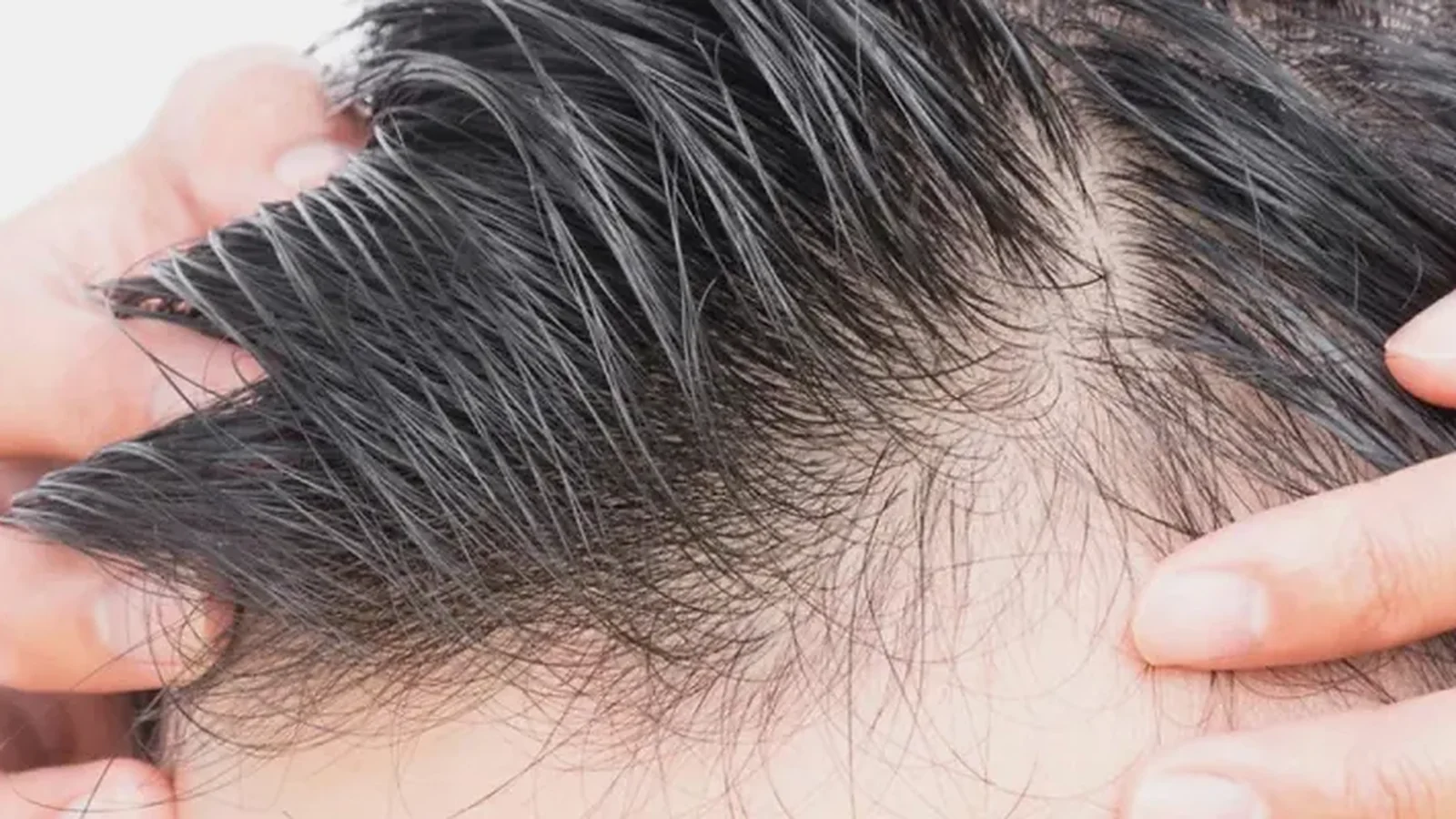
A good candidate for a hair transplant usually has pattern hair loss (androgenetic alopecia), a donor area at the back and sides of the head that can supply enough grafts, hair loss that has become reasonably predictable, and expectations that match what the donor area can achieve. People with patchy hair loss such as alopecia areata, active scalp disease, very weak donor hair or rapidly changing hair loss at a young age are often better served by other treatments first.
In this article I explain how candidates are usually assessed before a hair transplant is recommended, which questions matter, what a doctor looks at, and when the honest answer is “not now” or “not for you”.
At a glance
- The diagnosis comes first: a transplant suits pattern hair loss, not every kind of hair loss.
- The donor area sets the limit of what is possible, so it is examined as carefully as the bald area.
- Age and the speed of hair loss matter, because the plan must still look natural years later.
- Medical treatment to protect native hair is often part of the plan.
- Expectations are discussed openly: coverage, density and timing.
A candidate checklist
| Factor | What is assessed | Why it matters |
|---|---|---|
| Diagnosis | Patterned loss at the hairline, temples or crown; no signs of another cause | A transplant does not treat alopecia areata, scarring diseases or temporary shedding |
| Donor area | Density, hair thickness and the size of the safe zone at the back and sides | It sets how many grafts can be taken without visible thinning |
| Stage of hair loss | Norwood stage in men, Ludwig stage in women; front, crown or both | It shows how large the area is compared with the donor supply |
| Age and progression | Age at onset, family history, how fast things have changed | A young man whose loss is moving quickly needs a cautious plan |
| Hair characteristics | Thickness, curl and the contrast between hair and skin colour | Thick, wavy hair with low contrast covers more per graft |
| Health | Medicines, bleeding tendency, chronic conditions, scalp condition | Some conditions need treatment or adjustments before surgery |
| Expectations | What you want to achieve and by when | A good plan is one that can deliver what you expect |
1. The right diagnosis
The first question is not “how many grafts?” but “what kind of hair loss is this?” Pattern hair loss in men usually starts at the temples or the crown, and in women it typically appears as widening of the parting with the front hairline preserved. This is the type that hair transplantation was developed for, because the follicles at the back and sides of the head are resistant to the process and keep growing after they are moved.
Other types need a different approach. In alopecia areata the immune system targets the follicles and the course is unpredictable. In scarring alopecias the follicles are destroyed by inflammation, and a transplant is only discussed once the disease has been quiet for a long time, together with a dermatologist. Sudden, diffuse shedding after illness, stress or childbirth is usually temporary. If there are signs of these conditions, the transplant should wait.
2. The donor area
Every graft comes from your own donor area, and follicles taken from it do not grow back there. That makes the donor area the real budget of a hair transplant. The assessment covers how dense the hair is, how thick each hair is, and how large the zone is from which grafts can be taken safely without leaving the back of the head visibly thin.
In men with advanced hair loss, the bald area can be larger than the donor area can ever cover. Then the plan focuses on what makes the biggest visible difference, which is usually the hairline and the front of the scalp. If the donor hair itself is thinning, a transplant may not be advisable at all.
3. Stage of hair loss and age
The Norwood scale is commonly used to describe hair loss in men and the Ludwig scale in women. The stage shows how large the area is, but age suggests how much may still change.
A man in his early twenties with rapidly receding temples is a typical example of a situation that calls for caution. His final pattern is not yet clear, and a low hairline created today may sit in front of a bald area later. In many such cases medical treatment comes first, with regular photos and a decision once the pattern is more predictable. When a transplant is done, the hairline is designed to suit the face as it will look in the future, not only today.
4. Your health
A hair transplant is done under local anaesthesia, but it is still a surgical procedure. The doctor needs to know about all medicines and supplements, especially blood thinners, and about bleeding tendency, heart conditions, diabetes and any recent illness. Active scalp conditions such as inflammation or infection are treated first. Some conditions need extra precautions or the agreement of your own doctor. For HIV-positive patients, for example, the specific requirements are explained on our page about hair transplant for HIV-positive patients.
5. Medication to protect native hair
A transplant moves follicles; it does not stop the hair around them from continuing to thin. Reviews of contemporary hair transplantation describe medical treatment to prevent ongoing loss as an essential part of the plan in many patients. The options and their side effects should be discussed openly, and the decision is yours. You can read more about long-term expectations in is a hair transplant permanent?
6. Expectations
A useful question is what you hope to see in the mirror in a year. The answer is then compared with what the donor area can realistically provide. The best results come when coverage, density and timing are agreed before the procedure. If someone expects the density of their teenage years over the whole scalp from a limited donor area, this should be said clearly. A transplant that cannot meet the expectation is not the right plan.
When the answer is “not now” or “not for you”
- hair loss that is patchy or caused by an active disease;
- thinning that also affects the donor area;
- very young patients whose hair loss is changing quickly;
- sudden shedding that is likely to be temporary;
- health problems that should be treated first;
- expectations that the donor area cannot meet.
“Not now” often means that medical treatment, time and good photos will make the decision clearer later.
How the assessment usually starts
For patients who live abroad, the first step is a set of clear photos. I explain which photos to send in online hair analysis: which photos to send. Photos give a first impression; the final plan is made after an examination in person. If you want to compare techniques, see FUE vs DHI, and for an example of how I comment on a result, see case 05.
Frequently Asked Questions
Who is a good candidate for a hair transplant?
Usually someone with pattern hair loss, a donor area that can supply enough grafts, hair loss that has become reasonably predictable and realistic expectations. A doctor needs to examine you to confirm this.
Am I too young for a hair transplant?
There is no fixed age limit, but young men whose hair loss is still changing quickly are often advised to wait, start medical treatment and decide when the pattern is clearer.
Can I have a hair transplant if my donor area is thin?
It depends on how thin it is. A weak donor area limits the number of grafts and may make a transplant inadvisable. This is assessed during the examination.
Do I need medication after a hair transplant?
Not always, but many patients are advised to consider it to protect their native hair. The options and their side effects are discussed individually.
Sources
- Avram M, Rogers N. Contemporary hair transplantation. Dermatol Surg. 2009;35(11):1705–1719. PubMed
- Queen D, Avram MR. Hair transplantation: state of the art. Dermatol Surg. 2025;51(9):874–881. PubMed
- Jimenez F, Alam M, Vogel JE, et al. Hair transplantation: basic overview. J Am Acad Dermatol. 2021;85(4):803–814. PubMed
- Norwood OT. Male pattern baldness: classification and incidence. South Med J. 1975;68(11):1359–1365. PubMed
About the author: Dr. Noyan Süalp is a physician at Dr. Bayer Clinics in Istanbul. He studied medicine at the Ovidius University Faculty of Medicine in Romania and trained in hair transplantation at Dr. Bayer Clinics alongside Dr. Yetkin Bayer. More about Dr. Noyan Süalp
Want to know whether you are a candidate? Send a few photos through our online hair analysis form or message us on WhatsApp.
This article is for general information and does not replace a medical examination. Individual results vary.